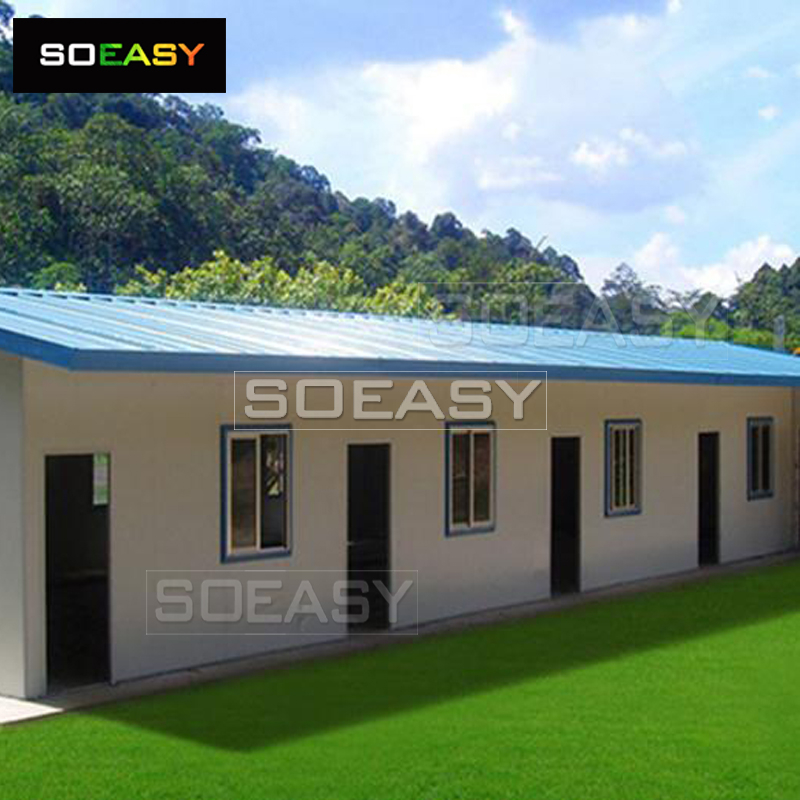
You browse online and spot a stunning modern home. The advertised price tag looks unbelievably affordable. You feel a surge of excitement, believing you finally found a cheap path to homeownership. Unfortunately, this initial number rarely tells the whole story. You are looking at the base price. This figure only covers the physical structure sitting on a factory floor. To move into a fully habitable home on your own land, you must calculate the turnkey price. Turnkey pricing includes shipping, site preparation, foundation work, and utility connections.
We want to eliminate the guesswork. This guide provides a transparent, evidence-oriented breakdown of the actual costs to build a prefabricated house. We will explore site prep expenses, hidden fees, and realistic financing paths. You will walk away ready to accurately evaluate your true budget.
Key Takeaways
The Turnkey Rule of Thumb: The final, move-in ready cost of a prefabricated house is typically 50% to 100% higher than the manufacturer’s advertised base price.
Type Dictates Price: Modular, manufactured, and panelized homes fall under the "prefab" umbrella but have distinct cost structures, compliance codes, and appraisal values.
Site Prep is the Wildcard: Land condition (slopes, rocky soil, utility access) is the single biggest variable in total project cost.
Financing Differences: Buyers typically cannot use a standard mortgage immediately; most require a construction-to-permanent loan to fund the build process.
The Base Cost vs. The "All-In" Cost of a Prefabricated House
Understanding the pricing structure of factory-built homes requires looking beyond the marketing materials. Buyers often encounter a steep learning curve when moving from initial quotes to final contracts.
The "Base Price" Illusion
Manufacturers advertise a sticker price to attract buyers. We call this the base price. It usually includes the modular boxes, basic interior finishes, cabinets, and standard fixtures. However, you must explicitly understand what it excludes. The base price does not include land acquisition. It excludes foundation pouring. It leaves out transportation from the factory. It also ignores the local labor needed for final assembly.
The Turnkey (All-In) Reality
To accurately budget for your new home, you must adopt a comprehensive evaluation framework. We refer to this as the turnkey price. It represents a fully habitable home ready for you to unlock the front door.
Here is the standard formula for calculating your total budget:
Cost Category
What It Includes
Impact on Budget
Land Cost
Property purchase, surveys, title fees.
Highly variable by region.
Site Prep
Clearing, grading, foundation, driveways.
Moderate to High.
Base Home Price
Factory structure, interior finishes.
Fixed upfront cost.
Delivery & Assembly
Trucking modules, crane rentals, button-up labor.
Moderate.
Taxes & Permits
Local government fees, sales tax, inspections.
Low to Moderate.
Cost Per Square Foot (Realistic Averages)
When you combine all these elements, the numbers shift significantly. A conservative, industry-standard range for all-in costs sits between $150 and $400+ per square foot. Regional labor rates heavily influence this final number. A high-end custom build in California will naturally cost more than a standard floor plan in Ohio. Quality of finishes also pushes your cost per square foot toward the upper end of the spectrum.
Hard Numbers: Cost Breakdowns by Prefabricated House Type
The term "prefab" is an umbrella category. It covers several different construction methods. Each type has distinct pricing structures, legal definitions, and assembly requirements.
Modular Homes
Definition & Cost: Builders construct modular homes in a factory according to local state and county building codes. Once finished, trucks transport the modules to your land. Local contractors place them on a permanent foundation. A modular home appraises and appreciates exactly like a traditional site-built home. Because of these strict standards, they represent the most expensive prefab option.
Estimated Base Price Range: Expect to pay between $70 and $150 per square foot just for the structure. Standard floor plans sit at the lower end. High-end custom modular homes, featuring luxury materials and complex rooflines, will push costs to the absolute maximum.
Manufactured Homes (HUD Code)
Definition & Cost: People formerly called these mobile homes. Builders construct manufactured homes on a permanent steel chassis. Instead of local codes, they adhere to the federal HUD code. This method makes them highly affordable. However, they come with strict zoning restrictions. Many neighborhoods outright ban them. They also require different financing rules.
Estimated Base Price Range: A single-wide manufactured home averages between $60,000 and $90,000 for the base unit. A larger double-wide averages between $120,000 and $160,000. These figures break down to roughly $50 to $85 per square foot before delivery.
Panelized and Kit Homes
Definition & Cost: In a panelized home, the factory builds the walls, roof trusses, and floor systems. They ship these flat-packed components to your site. A local general contractor then pieces them together like a giant puzzle.
Estimated Base Price Range: The kit itself may only cost $40 to $80 per square foot. However, you must highlight a crucial detail here. This method requires the most intensive local labor. It shifts a large portion of the budget away from the factory and directly onto your local contractor's invoice.
The Hidden Costs: Site Prep, Delivery, and Assembly
Many buyers face budget shortfalls because they underestimate the expenses outside the factory. Your land dictates a massive portion of the final bill.
Land and Permitting Constraints
Before any construction begins, you must evaluate the land. Feasibility studies and soil testing determine if the ground can support a foundation. You will also pay for local permitting. High-regulation areas demand larger budgets. For example, building in California requires specific seismic engineering and environmental compliance reviews. These administrative fees can easily add $10,000 to $30,000 to your project before dirt even moves.
Site Preparation and Foundation
Land condition serves as the single biggest budget variable. A perfectly flat lot requires minimal grading. A sloped or heavily wooded lot drastically changes the budget. You must pay to clear trees, blast rocks, and level the earth.
Clearing and Grading: Ranges from $2,000 to $10,000 depending on topography.
Crawl Space Foundation: Typically costs between $10,000 and $25,000.
Full Basement Foundation: Generally requires $25,000 to $50,000, depending on excavation depth and soil type.
Transportation and Crane Fees
Shipping wide-load modules down the highway requires serious logistics. Manufacturers usually charge a per-mile transport fee. If your land sits hundreds of miles from the factory, freight costs escalate quickly. Furthermore, you must rent a heavy-duty crane to lift the modules onto the foundation. Crane rental rates range from $1,000 to $3,000 per day. Delays caused by weather or poor site access will rack up expensive daily overages.
Utility Hookups (The "Off-Grid" vs. "On-Grid" Reality)
Your home needs power, water, and waste management. Connecting to existing municipal water and sewer lines usually costs a few thousand dollars. However, rural lots present a different reality.
If you build "off-grid" or in a remote area, you must drill a private well. You also need to install a septic system. A new well can cost between $5,000 and $15,000. A standard septic system adds another $6,000 to $12,000. Trenching for electrical lines from the nearest pole will further increase your utility budget.
Financing a Prefabricated House: How the Money Works
Securing money for a factory-built home differs greatly from buying an existing property. You cannot simply apply for a standard 30-year mortgage on day one.
Construction-to-Permanent Loans
Most buyers require a construction-to-permanent loan to fund the build process. Here is how the mechanics work. The bank approves a total loan amount based on the projected turnkey cost. As the project progresses, the bank releases funds in stages, known as "draws." They issue a draw to the manufacturer when the factory starts building. They issue another draw to the local contractor when they pour the foundation. Once the home is finished and the county issues a certificate of occupancy, the bank converts this temporary loan into a standard 15- or 30-year mortgage.
The Appraisal Challenge
You must prepare for the risk of appraisal shortfalls. Banks determine your loan limit based on an appraisal. The appraiser looks for "comparables" (comps) in your area to determine market value. Finding accurate comps for a unique modular home can prove difficult. If the appraiser values the finished home at $300,000, but your turnkey build cost reaches $330,000, you face a shortfall. Buyers need a reliable cash buffer to cover this gap out of pocket.
Financing Manufactured vs. Modular
You must understand the legal difference between home types when seeking a loan. Modular homes qualify for traditional mortgage products. Manufactured homes, especially those not placed on a permanent foundation, often require chattel loans. A chattel loan treats the home as personal property rather than real estate. These loans typically carry shorter terms and noticeably higher interest rates.
Prefabricated vs. Traditional Build: Which Yields Better ROI?
When you compare a prefabricated house to a site-built home, you must look beyond the raw material costs. True return on investment (ROI) factors in efficiency and time.
Material Waste and Labor Efficiency
Traditional construction generates massive amounts of waste. Factory settings eliminate this problem. Precision cutting machines reduce wasted lumber. Indoor assembly completely eliminates weather delays. Rain will not warp your framing, and snow will not halt your crew. Furthermore, a secure factory reduces material theft, which plagues many traditional job sites. These efficiencies create significant baseline savings.
Timeline as a Financial Asset
Time represents money, especially during construction. Every month you spend building means another month paying interest on a construction loan. It also means paying for temporary housing. A traditional home can take ten to fourteen months to finish. In contrast, a local crew can assemble and finish a prefab home in a matter of weeks once the modules arrive. Shrinking the timeline significantly reduces your carrying costs.
Shortlisting Logic
To determine if this path yields the right ROI for your situation, follow this logic checklist:
Do you already own land? If not, acquiring a suitable plot must be your first financial hurdle.
Is your site easily accessible? Heavy trucks and massive cranes need wide roads, free of low-hanging power lines or tight switchbacks.
Do you have a local general contractor? Factory teams do not usually pour foundations or connect utilities. You need a reliable local professional willing to finish the build.
Do you have cash reserves? You need liquidity to cover upfront deposits, site prep surprises, and potential appraisal gaps.
Conclusion
While a prefabricated house offers superior timeline predictability and climate-controlled build quality, it is not a magical loophole for cheap housing. The base price simply represents the starting line. Your final budget will reflect land conditions, regional labor rates, and local permit fees.
Your immediate next step requires securing land and requesting a professional site evaluation before signing any factory contracts. We highly recommend engaging a local general contractor early in the process. They will help you map out the hidden costs, ensuring your move-in day remains a celebration rather than a financial stressor.
FAQ
Q: Are prefabricated houses cheaper than traditional builds?
A: Generally, they are 10-20% cheaper on a turnkey basis. This savings primarily results from reduced labor hours and lower carrying costs due to faster build times. It does not necessarily mean the physical materials are cheaper.
Q: Do prefab homes hold their value?
A: Yes. Modular and panelized homes built to local building codes appraise and appreciate exactly like traditional site-built homes. However, manufactured homes built to HUD codes have a different, often slower, depreciation and appreciation trajectory.
Q: Can you put a prefabricated house on any plot of land?
A: No. Zoning laws, HOA restrictions, and physical road access dictate where you can build. Delivery trucks carrying wide modules cannot navigate narrow dirt roads, steep inclines, or areas with low bridge clearances.
Q: How long does it take to build a prefabricated house?
A: The actual factory time is usually just 2 to 4 weeks. However, the total project time averages 4 to 6 months. This accounts for securing permits, preparing the site, pouring the foundation, and completing the final on-site finishes.