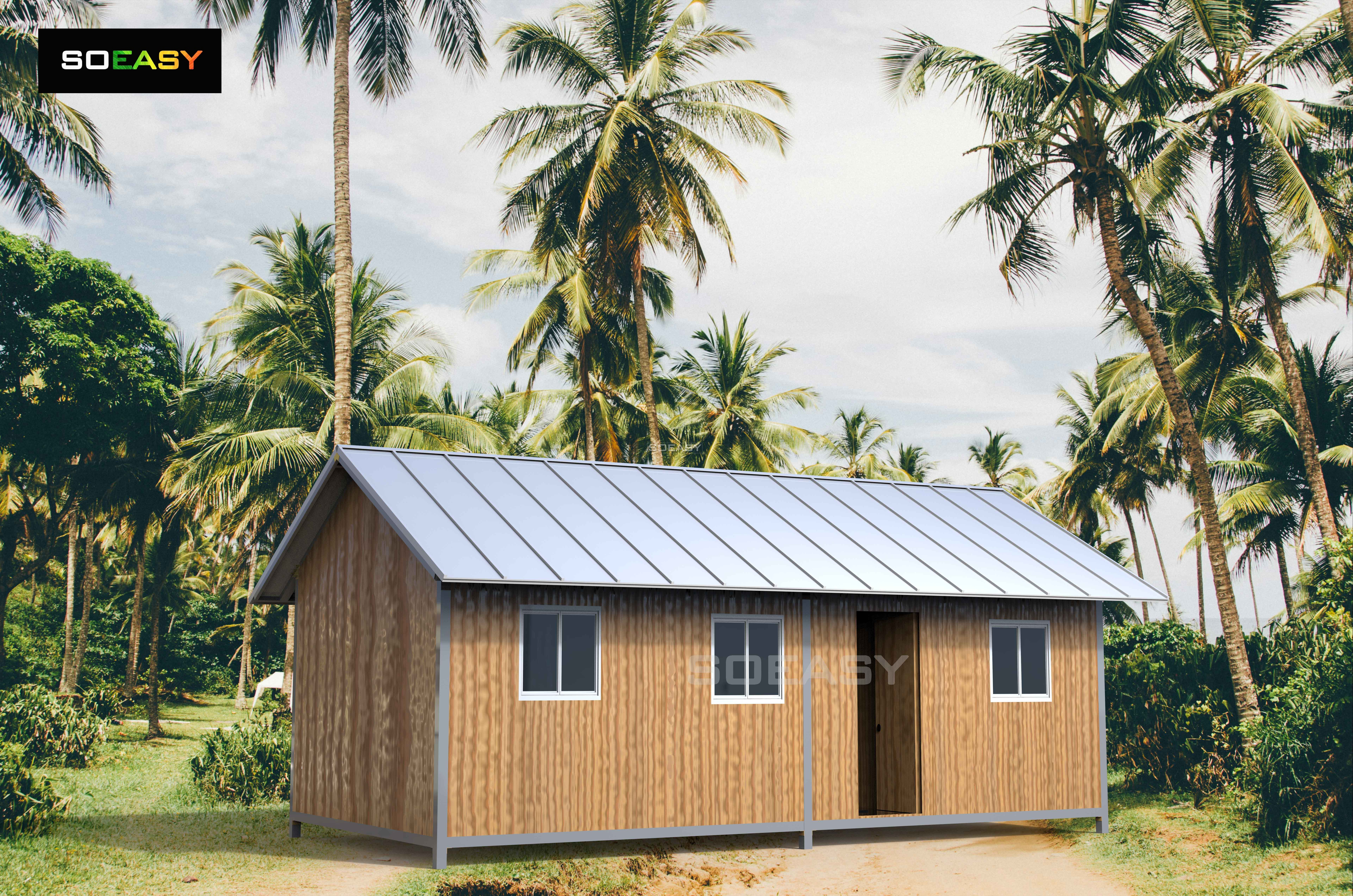
Buyers often encounter the term "prefabricated house" when searching for cost-effective, predictable alternatives to traditional site-built homes. You might see gorgeous modern designs online and wonder if they live up to the hype. Many people seek these homes to escape unpredictable construction delays. However, understanding the basic definition is only the first step. The real challenge is evaluating how off-site construction impacts local zoning, mortgage eligibility, and overall project costs. Factory building completely changes the standard rules of real estate. We provide a transparent, risk-aware breakdown of prefab housing to help you navigate this complex market. You will learn how to determine if this construction method aligns with your timeline, budget, and financing capabilities. Let us explore exactly what you should expect before you sign any manufacturer contract.
Key Takeaways
Definition: A prefabricated house is an umbrella term for any home whose major components are manufactured off-site in a climate-controlled facility before being transported and assembled on the final plot.
Categorization matters: "Prefab" includes modular (built to local state codes) and manufactured (built to federal HUD codes), which dictate financing and resale value.
Cost predictability vs. Turnkey myth: While factory construction offers fixed pricing on the structure, buyers must account for variable site-prep, utility, and foundation costs.
Financing realities: Modular prefabs qualify for traditional mortgages; manufactured homes often require specialized financing.
Defining the Prefabricated House: Categories and Compliance
It is crucial to establish clear definitions before planning a build. The term prefabricated house serves as a broad umbrella category. It covers multiple building methods. Each method follows entirely different regulatory standards. You must understand these differences early in your journey. They dictate where municipalities allow you to build. They also impact your financing options directly. Let us break down the primary categories to clarify the taxonomy.
Modular Homes (Standard Real Estate Equivalent)
Manufacturers build modular homes in three-dimensional volumetric sections. We refer to these sections as modules. Builders construct them inside a climate-controlled factory environment. Afterward, heavy-duty trucks transport the modules to your plot. A specialized crane lifts them onto a permanent foundation. Once assembled, they become permanent architectural structures. You cannot move them again.
These homes must follow the exact same local building codes as site-built homes. They adhere strictly to the International Building Code (IBC) and local state amendments. Appraisers treat them identically to traditional real estate. They build equity at the same robust rate. Local municipal inspectors review the final assembly on site. Therefore, modular homes offer an excellent, secure long-term investment indistinguishable from traditional neighborhood homes.
Manufactured Homes (The Modern Mobile Home)
Manufactured homes follow a completely different regulatory path. Builders construct them entirely on a permanent steel chassis. This chassis remains attached underneath the floor system even after delivery. They are essentially modern mobile homes, though they rarely move after initial placement.
Instead of local building codes, they follow a single federal standard. We know this as the HUD code. The Department of Housing and Urban Development strictly regulates their construction. Because of this federal override, they often face rigid local zoning laws. Many towns ban them from standard residential neighborhoods outright. Furthermore, they follow distinct depreciation curves. They rarely appraise like traditional real estate unless you permanently affix them to land you legally own.
Panelized and Kit Homes (The Hybrid Approach)
Panelized homes offer a hybrid construction approach. Factories pre-build the primary components. They construct wall panels, roof trusses, and floor systems off-site. They ship these components flat-packed to your site. This method demands significantly more on-site labor than modular construction. Local framing crews must assemble the panels piece by piece.
However, panelized systems offer immense architectural flexibility. You can customize wide-open interior spaces effortlessly. You can design soaring, complex rooflines. Kit homes fall under this category as well. You buy a complete package of pre-cut materials. You or your hired general contractor assemble the entire kit on-site. It blends factory precision with traditional framing practices.
Category
Construction Method
Regulatory Standard
Appraisal & Equity Value
Modular
Volumetric sections (modules) shipped whole
Local IBC / State Building Codes
Appreciates identical to traditional homes
Manufactured
Built entirely on a permanent steel chassis
Federal HUD Code
Often depreciates; appraised as personal property
Panelized/Kit
Flat-packed walls and trusses built on-site
Local IBC / State Building Codes
Appreciates identical to traditional homes
Prefab vs. Traditional Construction: Evaluating the Trade-offs
You need an objective framework to compare construction options. Factory construction fundamentally changes timeline dynamics, quality metrics, and design rules. It brings unique benefits and specific architectural limitations. We must evaluate these trade-offs carefully to set realistic expectations.
Feature Matrix
Prefabricated Construction
Traditional Site-Built
Weather Delays
Zero impact during factory phase
High risk of rain/snow delays
Material Waste
Extremely low (software optimized)
Moderate to High (on-site cuts)
Design Flexibility
Constrained by highway transport limits
Unlimited architectural freedom
Timeline Predictability: Factory construction severely reduces weather-related delays. Indoor building environments stay completely dry. Workers face no rain or snow stoppages. Imagine a rainy spring season. Traditional framing stops completely. Factory framing continues flawlessly under a dry roof. Additionally, you can prepare the site simultaneously. Your contractor pours the foundation while the factory frames the walls. This dual-track process often shaves several months off standard build times.
Quality Control & Material Waste: Assembly-line precision guarantees tighter joints. Climate-controlled environments stop raw lumber from warping. They also prevent moisture from trapping inside enclosed walls. Builders use advanced software to optimize material cuts. This drastically reduces lumber waste destined for landfills. Tighter building envelopes result in superior energy efficiency. Your utility bills often decrease noticeably as a result.
Design Limitations: Prefab structures face strict transportation constraints. Factories must ship large modules over public highways. Highway bridge heights dictate maximum roof pitches. Lane widths limit module sizes rigidly. These logistical hurdles restrict maximum ceiling heights. They can also limit wide, uninterrupted room spans. Traditional builds offer total geometric freedom. Prefab designs require clever architectural compromises to look spectacular while remaining transportable.
Cost Structure: Factory building provides fixed pricing for the core structure. You sign a contract for a set price early in the process. This protects you against local labor shortages. It shields you from sudden material price spikes. However, the total project costs often parallel traditional builds. Site work, foundations, and utility hookups remain highly variable. You pay standard local market rates for these essential final steps.
The Financial Reality: Mortgages, Appraisals, and ROI
Securing funding requires specialized real estate knowledge. The financial mechanics differ significantly from purchasing an existing traditional house. You must navigate unique mortgage structures and occasional appraisal hurdles. Let us clarify the financial realities and investment safety of off-site construction.
Securing a Mortgage: Financing depends entirely on your chosen category.
Modular/Panelized: These projects typically require a "construction-to-permanent" loan. Lenders do not hand over a lump sum upfront. Instead, they release funds in specific stages. We call these stages draws. The factory receives a draw to begin manufacturing. The site builder receives draws to pour the foundation. The loan seamlessly converts to a standard mortgage upon final inspection.
Manufactured: These homes often require chattel loans. Lenders treat them as personal property rather than actual real estate. Interest rates run noticeably higher. Loan repayment terms remain shorter. You can sometimes qualify for standard mortgages, but only if you permanently affix the home to an approved foundation on land you already own.
Appraisal Hurdles: Lenders always require comparable sales to approve large loans. Appraisers look for similar nearby homes sold recently. Finding localized comps for highly customized modern prefabs presents occasional challenges. Traditional historical neighborhoods might lack modern modular examples entirely. Appraisers sometimes struggle to assign accurate values without exact peers. You must work closely with specialized lenders who deeply understand factory-built housing nuances.
Long-Term Resale Value: Many buyers worry endlessly about depreciation. We must dispel the harmful myth that all prefabs lose value over time. Manufactured homes often depreciate, much like vehicles. Modular prefabs built strictly to local IBC codes do not. They appreciate at the exact same rate as the broader local real estate market. They build equity reliably, providing a safe harbor for your capital.
Implementation Realities and Hidden Cost Risks
Manufacturers frequently advertise aggressively low starting prices. You must view these attractive figures through a skeptical lens. Successful housing projects require strict, comprehensive budget management. Hidden risks can easily derail your financial plans. Let us objectively examine the implementation realities.
The "Base Price" Illusion: Advertised prices almost never tell the whole story. A base price covers only the factory-built structure. It rarely includes land acquisition costs. It completely excludes local permit fees. Manufacturers do not cover necessary soil testing. You must pay separately for essential utility hookups. Water, sewer, and electrical grid connections frequently cost tens of thousands of dollars.
Site Preparation and Foundation: Land conditions dictate your foundation budget heavily. Sloped plots require massive, engineered retaining walls. Rocky soil demands expensive heavy excavation equipment. Remote, off-grid plots force you to pay premium labor rates for travel time. These local variables can drastically inflate site-prep costs. Unplanned excavation expenses quickly erode the anticipated savings of choosing a modular build.
Transportation and Crane Fees: Distance equals money in off-site construction. Delivery costs scale linearly with your distance from the factory. Escort vehicles and special oversize highway permits add up quickly. Furthermore, final assembly requires heavy machinery. You must hire specialized local crane operators to lift the modules. Crane rental costs vary wildly by region. You must budget these logistical line items independently.
Zoning and HOA Restrictions: Never buy a home or land before checking local laws. Many municipalities enforce strict zoning covenants. Homeowner Associations (HOAs) frequently prohibit certain architectural styles. They almost universally ban manufactured homes. Some overly restrictive HOAs even ban modular construction outright. You must read your local ordinances thoroughly. Failure to do so invites disastrous legal battles.
How to Evaluate and Shortlist Prefab Manufacturers
Vendor selection determines your ultimate project success. You must vet manufacturers rigorously. Do not rely solely on beautiful Instagram photos or marketing brochures. Ask hard, technical questions during the initial consultation phase. Use these actionable criteria to build your final shortlist securely.
Code Compliance & Delivery Radius: Verify their legal certification status immediately. The manufacturer must hold current certifications to build for your specific state or county. Building codes change dramatically across state lines. Furthermore, check their delivery radius. Hiring a factory located 1,000 miles away ruins your budget with shipping fees. Look for reputable facilities within a reasonable driving distance.
Scope of Work (Turnkey vs. Fabrication Only): Determine their exact operational scope clearly. Some companies offer full turnkey services. They handle local permitting, site clearing, and all utility work. Others operate strictly as fabricators. They drop the house off at the curb and drive away. If they only fabricate, you must hire an independent General Contractor locally. Clarify these operational boundaries early to avoid stranded projects.
Warranty Structures: Read the fine print on all warranty documents. Differentiate between structural and cosmetic coverage carefully. Reputable builders offer comprehensive 10-year structural warranties. These cover the main framing and foundation integration. Cosmetic and system warranties behave differently. They usually cover plumbing, electrical fixtures, and paint finishes for just one or two years.
Communication Protocols: Assess their transparency before signing anything. Construction projects inevitably encounter delays. Supply chains break down periodically. You need a partner who communicates bad news clearly. Ask about their official change order process. Find out who handles final site-button-up responsibilities. A vague communication protocol signals severe future frustration. Demand a dedicated, responsive project manager.
Best Practices for Vendor Evaluation:
Tour the actual factory floor in person to observe build quality.
Speak with at least three past clients located in your specific region.
Review standard contract terms carefully with a specialized real estate attorney.
Common Mistakes to Avoid:
Paying a large, non-refundable deposit before legally securing a land plot.
Ignoring local crane access limitations, such as low-hanging power lines or narrow dirt roads.
Assuming the factory automatically covers local building department permit fees.
Conclusion
We must remember that the prefabricated house is simply a sophisticated method of construction. It is not a compromise on structural quality or architectural beauty. Off-site assembly delivers exceptional precision, timeline speed, and energy durability. However, your success relies entirely on strategic, informed planning. You must align the specific type of prefab—whether modular or manufactured—with your stringent local zoning laws. You must also align it perfectly with your personal financing capabilities.
Take these actionable next steps to protect your investment. First, secure your land plot and order a soil test. Second, verify all local zoning restrictions and HOA covenants explicitly. Third, pre-qualify for a construction-to-permanent loan with a lender experienced in modular builds. Finally, thoroughly vet your manufacturer's scope of work. Advise buyers to secure land and verify local zoning restrictions before paying any design deposit to a manufacturer. Take control of the process, manage your site risks diligently, and enjoy the journey to your new home.
FAQ
Q: Is a prefabricated house cheaper than building a traditional home?
A: Not always. While factory costs are lower and more predictable, transportation, land, and local site-prep often bring the final price close to traditional builds. The primary savings are in time and reduced labor overruns.
Q: Do prefabricated houses last as long as normal houses?
A: Yes. Modular and panelized prefabs are built to the exact same (and sometimes stricter) building codes as traditional homes, designed to withstand the stress of highway transport, making them structurally highly durable.
Q: Can I get a standard mortgage for a prefabricated house?
A: If it is a modular or panelized home built to local codes on a permanent foundation, yes. Manufactured homes on a chassis typically require specialized lending products.