Introduction
A Prefabricated house—often called a prefab home—represents the evolution of construction methods where most components are manufactured in a controlled factory environment before being transported and assembled on-site. This process combines advanced engineering, material innovation, and sustainability principles. Understanding what a prefabricated house is made of is essential for homeowners, developers, and sustainability advocates alike because the materials determine durability, insulation, maintenance, and cost efficiency.
This guide dives deep into the essential materials, structural systems, and design technologies that make up a prefabricated house, offering an inside look at how these homes achieve strength, comfort, and sustainability while transforming the future of housing.
The Structural Foundation of a Prefabricated House
Every prefabricated house starts with a strong foundation—both literally and structurally. While the modular or panelized sections are produced in factories, they still rely on stable base systems installed on-site.
| Foundation Type | Description | Typical Use |
| Concrete Slab | A flat, reinforced concrete base | Permanent modular homes |
| Steel Piers | Elevated steel columns supporting the frame | Portable or elevated prefab homes |
| Crawl Space | Short concrete or block walls creating an underfloor space | Insulated and ventilated structures |
The choice of foundation depends on local soil conditions, climate, and mobility requirements. For example, modular prefabricated houses built in coastal or flood-prone regions often use steel pier foundations to elevate the structure and prevent moisture damage.
Most prefab homes anchor to the foundation using bolted steel plates or connectors, ensuring stability comparable to traditional site-built houses. The foundation is not prefabricated but is vital for integrating factory-made modules into a permanent or semi-permanent setting.
Primary Structural Materials: Steel, Timber, and Concrete
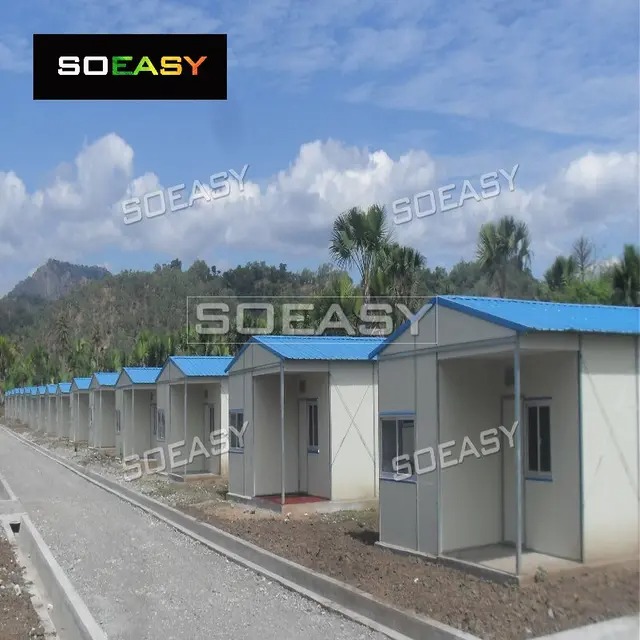
The backbone of any prefabricated house lies in its structural frame. Modern prefab homes primarily use three core materials—steel, timber, and reinforced concrete—each offering distinct advantages depending on the desired strength, weight, and flexibility.
| Material | Advantages | Limitations | Common Applications |
| Steel Frame | High tensile strength, termite-proof, fire-resistant | Higher cost, thermal bridging | Modular units, container homes |
| Timber Frame | Renewable, lightweight, easy to assemble | Susceptible to moisture or pests if untreated | Panelized homes, eco-prefabs |
| Concrete Panels | Excellent insulation, durable, soundproof | Heavier, requires cranes | High-end modular or hybrid prefabs |
Many prefabricated houses today adopt a hybrid structure, combining steel skeletons with timber interior frames to balance strength with environmental sustainability. For example, light-gauge steel framing (LGSF) systems are favored for their precision, enabling tight tolerances and energy-efficient sealing once modules are joined on-site.
Wall Panels and Insulation Systems
The walls of a prefabricated house are not merely partitions—they are engineered layers designed to deliver structural integrity, insulation, soundproofing, and aesthetic appeal. Prefabrication allows each wall panel to be manufactured as a composite system in one piece, integrating multiple materials efficiently.
Common Wall Panel Composition:
Outer Cladding Layer – often made of fiber cement, metal, or engineered wood siding for protection and design versatility.
Structural Core – typically includes OSB (Oriented Strand Board), steel studs, or reinforced concrete.
Insulation Layer – filled with polyurethane foam, mineral wool, or EPS (Expanded Polystyrene) for superior thermal performance.
Interior Layer – gypsum board or fiber panels for smooth interior finishes.
| Insulation Material | R-Value (Thermal Resistance) | Eco-Friendliness | Fire Resistance |
| EPS Foam | Moderate | Medium | Low |
| Mineral Wool | High | High | Excellent |
| Polyurethane | Very High | Medium | High |
This multi-layered approach ensures prefabricated houses meet or exceed modern energy efficiency standards (such as Passive House or LEED). The precision of factory manufacturing minimizes air leaks, giving prefab homes a tighter, more energy-efficient envelope than most traditional homes.
Roofing and Ceiling Components
Roofs in prefabricated houses are pre-engineered to balance load-bearing capacity, weather resistance, and aesthetic design. Depending on the design, roofs can be flat, pitched, or modular truss systems that fold or attach on-site.
Typical Roofing Materials Include:
Galvanized Steel Sheets: Durable and lightweight, ideal for modular transport.
Fiber Cement Panels: Offer high insulation and fire resistance.
Bituminous Shingles or Tiles: Used for residential-style prefab houses for aesthetic appeal.
Sandwich Roof Panels: Combine insulation foam between metal sheets for quick installation.
A prefabricated ceiling system usually incorporates acoustic panels, LED lighting fixtures, and insulation mats pre-installed in the factory, drastically reducing on-site labor.
The controlled environment of prefab production ensures all roof joints and drainage slopes are perfectly aligned, eliminating common issues like leaks and thermal bridging.
Flooring Systems and Substructure Materials
Flooring in prefabricated houses varies depending on whether the structure is modular, panelized, or container-based. The substructure must handle transport loads, occupancy weight, and acoustic requirements.
Common Flooring Layers:
Steel or Timber Joist Frame
Subfloor Boards (Plywood, OSB, or Cement Boards)
Thermal/Acoustic Insulation Layer
Surface Finishes (Vinyl, Laminate, Tile, or Engineered Wood)
In high-end prefab homes, cross-laminated timber (CLT) is increasingly used due to its sustainability and exceptional strength-to-weight ratio. It offers a warm, natural finish and high load-bearing capacity while keeping the structure lightweight.
Some prefab designs also incorporate raised floors with built-in utility channels, allowing easy installation and maintenance of electrical, HVAC, and plumbing systems without invasive floor modifications.
Windows, Doors, and Glazing Systems
Energy-efficient fenestration is a hallmark of modern prefabricated houses. Since all openings are precisely cut during the factory stage, window and door installations achieve exceptional accuracy.
Popular Materials for Prefab Windows & Doors:
uPVC Frames: Low maintenance and cost-effective.
Aluminum Frames: Sleek design, strong and weather-resistant.
Composite Frames: Combine wood interiors and aluminum exteriors for energy and aesthetic balance.
Glazing Options:
Double or Triple Glazed Glass
Low-E Coated Glass for heat reflection.
Argon-Filled Panels to improve thermal insulation.
Factory-installed windows and doors minimize air leakage and ensure consistent quality control, resulting in better energy ratings and long-term performance for prefabricated houses.
Interior Finishes and Modular Fixtures
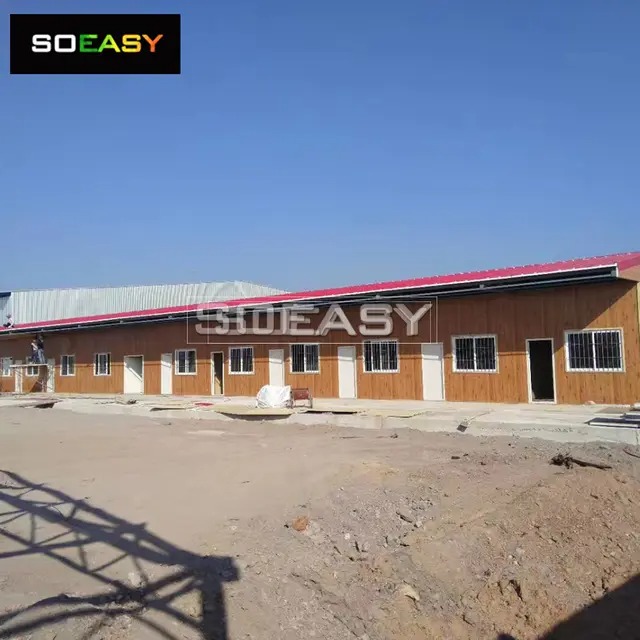
Inside a prefabricated house, almost every element—from walls to cabinets—is built as a prefabricated module. This allows homeowners to customize styles while maintaining consistency and precision.
Typical Interior Finishes Include:
Drywall or Gypsum Board Walls with factory-applied primer.
Laminate, Vinyl, or Tile Flooring ready for final installation.
Pre-built Kitchens and Bathrooms, including plumbing fixtures and countertops.
Integrated Wiring and Lighting Systems for plug-and-play installation.
Many prefab manufacturers offer “turnkey” interior packages that include modular kitchens, built-in wardrobes, and smart home automation. These components are designed for rapid assembly, drastically reducing finishing time compared to traditional construction.
Sustainable and Innovative Materials in Modern Prefab Homes
Sustainability is at the core of modern prefabricated housing. Beyond steel and timber, manufacturers are now using eco-innovative materials to reduce carbon footprints and improve recyclability.
| Material | Description | Sustainability Advantage |
| Bamboo Panels | Engineered bamboo boards replacing timber | Rapidly renewable and strong |
| Recycled Steel | Steel recovered and reused from industrial waste | 100% recyclable |
| Hempcrete | Mix of hemp fibers and lime binder | Carbon-negative insulation |
| Cork & Recycled Rubber Flooring | Alternative interior materials | Renewable and sound-absorbing |
These materials not only make prefabricated houses greener but also improve indoor air quality by reducing volatile organic compounds (VOCs). The integration of solar-ready roofs, rainwater harvesting systems, and smart insulation technologies demonstrates how prefab construction is reshaping the sustainability landscape.
Conclusion
A Prefabricated house is a masterpiece of modern construction engineering—composed of precision-made materials such as steel, timber, concrete, insulation composites, and advanced finishes, all designed to assemble seamlessly on-site. Each component contributes to energy efficiency, durability, and comfort, making prefab homes a sustainable alternative to conventional housing.
Understanding what a prefabricated house is made of reveals more than just its materials—it highlights the innovation, efficiency, and environmental responsibility shaping the future of residential architecture.
FAQ
1. Are prefabricated houses as durable as traditional homes?
Yes. Prefabricated houses built with steel or reinforced concrete frames can match or exceed traditional durability standards. Factory precision ensures consistent quality and tight construction tolerances.
2. What materials make prefab homes eco-friendly?
Sustainable options such as bamboo panels, recycled steel, hempcrete, and energy-efficient insulation contribute to eco-friendly prefab construction.
3. Can prefabricated house materials withstand extreme weather?
Absolutely. Prefab houses are engineered for local building codes and can withstand strong winds, earthquakes, and heavy snow when built with proper reinforcement.
4. Is insulation better in prefabricated houses?
Generally, yes. Prefab walls use multi-layer insulation systems created in controlled factory settings, minimizing heat loss and maximizing energy performance.
5. How long do prefabricated house materials last?
With regular maintenance, steel and concrete structures can last over 60 years, while treated timber frames offer a 40–50-year lifespan depending on climate and upkeep.


