A well-planned container shop is not only a retail unit. In large-scale developments, it often becomes part of the project’s support system, daily service network, or hospitality image. That is especially true in large camps, modular dormitory communities, and steel structure hotel developments, where the shop must do more than sell products. It needs to match traffic patterns, service demands, customer stay time, and the wider site plan. SOEASY develops modular commercial solutions for practical project use, so understanding the main container shop types is an important step before deciding which format best fits the scale and purpose of the project.
Compact Service Types for Large Project Support
A focused type for camp service and satellite retail
In large projects, the most compact container shop types are usually used as service support points rather than standalone destination spaces. Their role is to provide drinks, coffee, snacks, or essential retail close to the daily movement of people. In a large camp, this kind of unit may sit near shared activity zones, worker circulation routes, or central service areas. In a modular dormitory project, it may support routine purchases close to residential blocks.
The main advantage of this type is efficiency. It works well where the business depends on regular, repeated transactions and where site planning requires a smaller footprint. For operators who need a practical support point inside a much larger project, a focused compact unit is often one of the most useful container shop types available.
Openable-panel layouts for stronger service visibility
A compact commercial unit becomes much more effective when the opening design supports visibility and quick service. Openable-panel layouts are popular because they create a wider face to the customer and make the shop feel more active. In camp and dormitory settings, this helps the unit capture routine pedestrian flow and improves the speed of ordering and handover.
This type is especially suitable when the shop needs to support convenience without occupying too much site area. It gives the project a commercial function that feels open and accessible while still remaining efficient in installation and operation. In larger developments, that balance matters more than decorative complexity.
Single-Module Shops for Daily Community Use
The practical middle type for modular living projects
Among the most widely used container shop types, the standard single-module layout is often the most practical middle ground. It gives more working room than a compact support unit while still staying manageable in transport, installation, and site coordination. For large camp projects and modular dormitory communities, this type is especially useful because it supports everyday service in a more stable and complete way.
A single-module shop is often the right answer when the commercial point needs to handle regular traffic across the whole project rather than serve as a small secondary station. It usually offers a better balance of counter space, equipment placement, storage, and staff movement. That makes it a dependable daily-use format, especially where repeat transactions are expected at several peak periods each day.
Better suited to coffee, convenience, and repeat-use demand
This type works well when the project needs a stronger daily service function. In a large camp, it can support coffee, drinks, snacks, and essential retail as part of the camp’s living environment. In a modular dormitory community, it can operate as a practical convenience point that supports repeat purchases before work, after work, or during breaks.
The value of this format lies in its consistency. It is large enough to feel like a real service space, but still compact enough to integrate smoothly into modular project planning. That is why it remains one of the most popular container shop types for large residential-style modular developments.
Popular Container Shop Types at a Glance
| Shop Type | Best For | Space Level | Customer Stay Time | Main Advantage |
| Compact open-panel shop | Camp support and satellite service | Compact | Very short | Fast service and efficient placement |
| Standard single-module shop | Dormitory and daily community use | Medium | Short | Balanced workflow and reliable daily use |
| Open-side service shop | High-visibility service areas | Medium | Short | Strong frontage and easy ordering |
| Two-floor balcony shop | Hotel café and branded leisure use | Large | Medium to long | Stronger image and customer attraction |
| Terrace and corridor shop | Hospitality and social commercial zones | Large | Long | Better atmosphere and longer stay value |
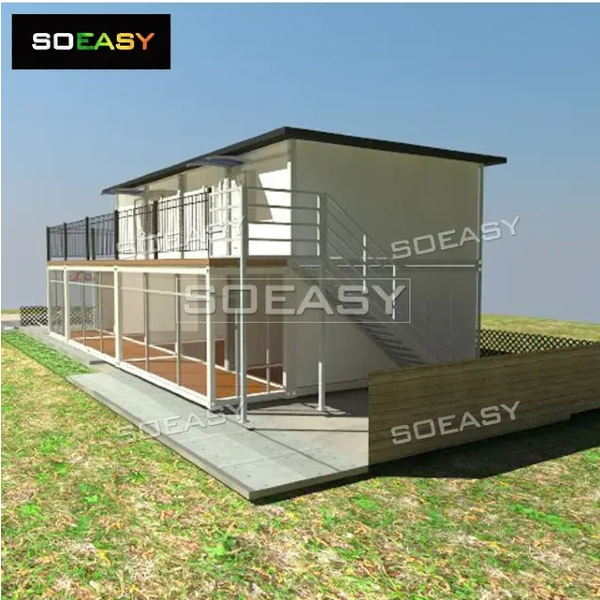
Two-Floor and Multi-Function Shop Types
Two-floor balcony shops for stronger hospitality presence
When the project requires more than a practical service point, larger container shop types become more relevant. A two-floor shop with a balcony is popular because it changes the role of the unit from basic retail support into a more visible social or hospitality space. This type is especially suitable for steel structure hotel developments, where the commercial unit may need to function as a café, lounge, or branded leisure point rather than just a simple sales counter.
The balcony level adds more than extra area. It improves visual identity, gives the shop a stronger presence on the site, and helps create a more memorable environment. In hospitality-oriented projects, that can be a major advantage because the shop contributes to both business use and the image of the wider development.
Terrace and corridor types for relaxed social use
Terrace and corridor layouts are also among the most popular larger container shop types because they support a more open and social atmosphere. They are especially effective when the commercial unit is meant to encourage people to stay longer, meet informally, or use the space as part of a broader leisure environment.
This makes them highly suitable for steel structure hotel projects and other mixed-use developments where a basic kiosk would feel too limited. Compared with simpler formats, terrace-based layouts help the shop become part of the experience of the site instead of only serving transactions.
Connected layouts for larger project programs
Some large projects require the commercial unit to handle more than one function. In these cases, connected or expanded layouts become a practical option. Separate areas for preparation, service, storage, and customer use can improve efficiency and reduce pressure during busy periods.
This type is especially relevant when the container shop is part of a broader camp service zone, a larger dormitory community, or a hotel-related commercial cluster. In these settings, a connected layout supports a more complete business role and often performs better than a single simple box.
Types Based on Customer Stay Time
High-turnover service types
Some container shop types are designed for quick daily use. They work best when customers need fast ordering and simple handover rather than a place to stay. In large camps, these formats are useful where workers need a dependable coffee or snack point that fits short break periods. Their main value is efficiency, clear access, and easy repeat use.
Short-stay community types
Other formats support a slightly longer pause. These are useful in modular dormitory communities, where the commercial point may serve as part of daily living rather than only as a fast stop. The customer may stay briefly, look around, or make a small group purchase. This type usually needs a better counter arrangement, a more comfortable frontage, and a stronger balance between speed and usability.
Social and destination types
The largest and most visible container shop types are built for longer stay and stronger site identity. Balcony units, terrace formats, and multi-level layouts all fall into this group. They are especially effective in hotel-related projects or premium mixed-use developments where the shop contributes to the atmosphere of the site as much as to daily sales. In these cases, the commercial unit becomes a destination point rather than only a support service.
Which Type Fits Large Camps, Modular Dormitories, and Steel Structure Hotels?
Large camps
Large camps usually need dependable service types that support everyday routines. Compact open-panel units and standard single-module shops are often the most practical options because they provide coffee, drinks, snacks, and convenience goods without disrupting the wider site plan. In this setting, the container shop should function as part of daily camp life and improve the comfort of the whole project.
Modular dormitories
Modular dormitory projects depend on convenience, repeat use, and smooth peak-hour service. The best container shop types for this environment are usually those that combine easy access with stable daily operation. Standard single-module shops often work especially well because they support a wider service range and a better rhythm of everyday use.
Steel structure hotels
Steel structure hotel developments usually need a stronger commercial image. A simple support unit may not be enough if the shop is meant to add value to the hospitality environment. This is where two-floor balcony shops, terrace shops, and other larger social formats become much more persuasive. They support café, lounge, and bar-style use far better than basic service models and help strengthen the leisure character of the project.
Conclusion
The most popular container shop types remain popular because each one supports a different project need. Some are better for fast service in large camps, some are stronger for repeat-use daily retail in modular dormitories, and some are designed to add commercial and hospitality value to steel structure hotel developments. For SOEASY, the real value of a modular shop lies in how well it fits the wider project instead of how well it performs as a small standalone retail box. If you are planning a large development and need to compare the right commercial format, contact SOEASY to explore a suitable coffee shop bar with terrace solution for your site.
FAQ
What are the most practical container shop types for large camps?
For many large camps, compact open-panel units and standard single-module shops are the most practical because they support fast service, repeat use, and easy integration into the wider site.
Which container shop type fits modular dormitory projects best?
Standard single-module shops often fit modular dormitory communities best because they provide better storage, smoother workflow, and stronger daily service capacity.
Why are balcony and terrace container shop types more suitable for hotels?
Because hotel-related projects usually need stronger commercial image, longer customer stay time, and a more social atmosphere than a basic service point can provide.
Can one container shop type work for every large project?
Not always. Large camps, modular dormitories, and steel structure hotels have different traffic patterns, service needs, and customer expectations, so the format should be matched to the project.


